
How Chinese people did laundry before washing machines, from ash ‘soap’ to stone beatings
Before chemical detergents and modern equipment, Chinese people kept their clothes clean with little more than river water, wood and ash

My washing machine has finally given up the ghost – a poltergeist, really, judging by the deafening din it makes – and I am in the market for a replacement.
Am I being odd for feeling a small thrill at the prospect? I must confess to a mild obsession with laundry. Much as I resist the comparison, I have almost certainly inherited this tendency from my mother, who runs two loads a day, come rain or shine, festive season or not.
I am a more restrained enthusiast: I limit myself to one daily wash of worn clothes and used towels. Even so, this habit raises eyebrows. Many people I know prefer to let their dirty laundry marinate for several days before tackling it in one go. Some even do it once a week!
In pre-industrial China, before the advent of washing machines and chemical detergents, laundry was a labour-intensive affair shaped by local environments and available materials. Clothes were typically washed in rivers or streams. Groups, most often women, would gather at the water’s edge, soaking garments before beating them against stones or with wooden pestles to dislodge dirt.
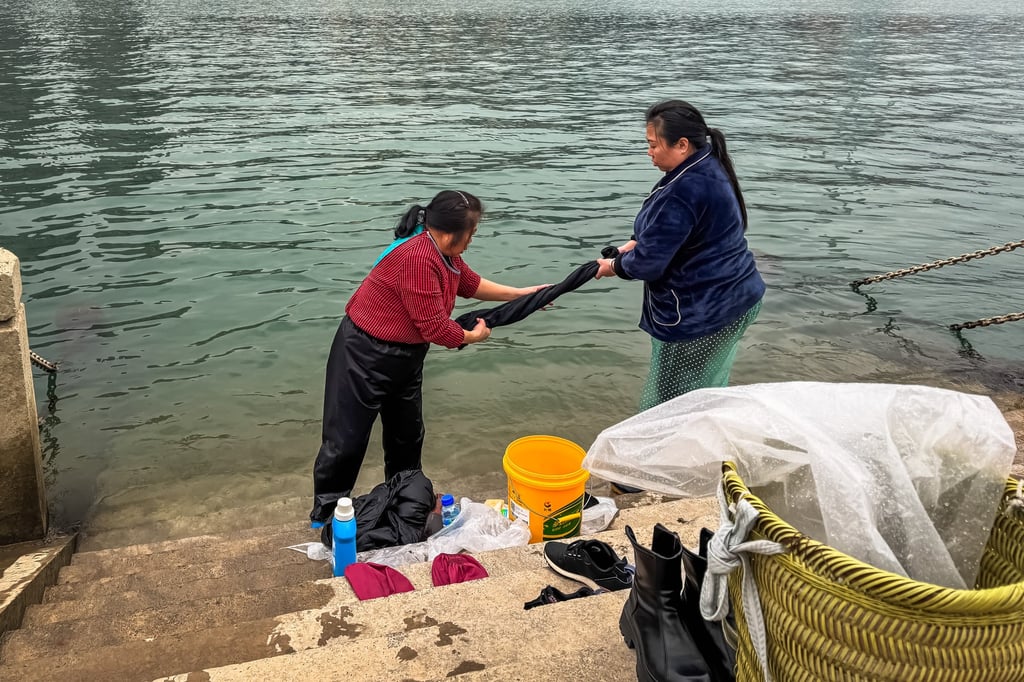
Repeated blows on wet fabric loosened grime embedded in the fibres, which running water then carried away. It was a straightforward but effective technique, and the pestle became a standard household item in many regions. One suspects it also doubled as a useful outlet for anger and frustration.