Movement culture: used by UFC legend Conor McGregor, fitness trend can help no matter how unfit you are
- Emerging fitness regime draws from virtually all the physical disciplines, and offers an unusually well-rounded training style to suit all shapes and sizes
- Its main aim is to fight people’s lack of physical activity – a trigger for heart disease, depression and other conditions

A group of people crawl on all fours, juggling tennis balls or curling their bodies as they perform spinal waves on a Hong Kong beach.
“We work all day on computers. Then you see people staring at phones while they’re doing sit-ups in the gym or having lunch together,” says Andres Vesga, a Hong Kong-based movement coach. “People are so detached [from] their own bodies and from each other. Movement can protect us from this environment.”
In November, a World Health Organisation study revealed that 80 per cent of adolescents are not completing at least one hour of physical activity per day. A 2018 study published in British medical journal The Lancet, and involving 1.9 million adults, found nearly a third performed less than 150 minutes of moderate physical activity, or 75 minutes of vigorous physical activity, every week.
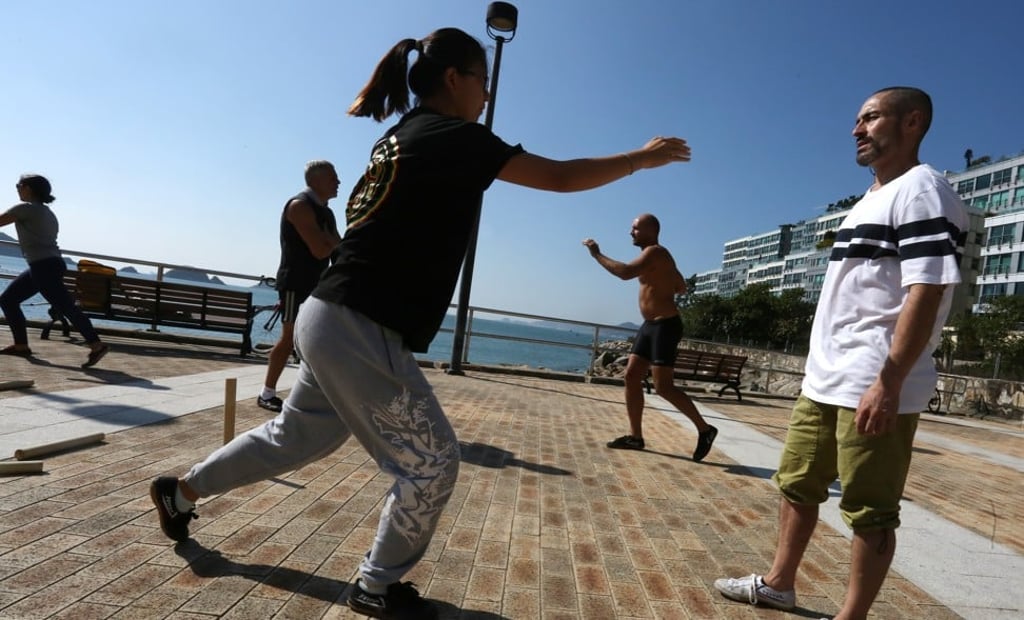
Vesga invited me to one of his two-hour weekend classes, where the no-nonsense instructor guides his students through a broad variety of exercises. After warming up, we perform hand-eye coordination drills, balance 15-inch (38cm) batons on our arms to fine-tune focus and muscle control, practise locomotion – deliberately moving on all fours – and enhance power through body weight fitness sets.