What’s driving Korea’s fake fashion market: designer on the hurdles facing the industry
Moon Choi, who will soon make her New York Fashion Week debut, talks about the counterfeit culture and her brand’s gender-fluid clothing

What prompted you to start your own label? “I graduated from Parsons [art and design school, in New York] in 2016, and was a finalist in the CFDA+ Design Graduates programme. The committee for the award encouraged me to start my own label. Even though I didn’t win, they gave me confidence as a designer. I like to say that I’m New York-based but my brand is registered in South Korea. Seoul and New York are totally different cities, each with their own pace and systems, which is why it’s important to me to be present in both and take advantage of what they can offer.”
Tell us about your current collection. “Autumn 2018, like all of my collections, is based on the concept of androgynous fashion. This time around, it’s aesthetically focused on the importance of silhouette and figures. It’s about showcasing identity and personality, rather than [distinguishing] between a woman and a man. It’s clothing without a stereotype, with a contrasting balance of texture, fluid lines and beauty. I chose a palette of colours that are familiar in our daily lives, like light sky blue, sand and off-white.”
K-pop is a big influence on what people wear, as are the big fashion houses like Balenciaga and Gucci. A lot of Korean labels copy big brands really obviously
Describe your creative process. “Storytelling is important to me: it’s the first thing I think of before I sit down to design anything. I physically write out a story and then I find images that relate to it. Sometimes it’s stills from old indie movies, but it can also be music or artwork. I try to look within my own life for inspiration, instead of gathering images online. I believe designers need to convey messages through their collections and tell their own stories, instead of looking to what’s trendy. Each collection should tell you who the designer is and what kind of life they live.”
Who is the Moon Choi customer? “My clothing is not defined by gender, so I don’t put labels on who’s going to wear it. It doesn’t matter if it’s a man or a woman, it’s more about a strong personality who’s confident to express what they think. In that sense, my customer could be a feminist or they could be the direct opposite.”
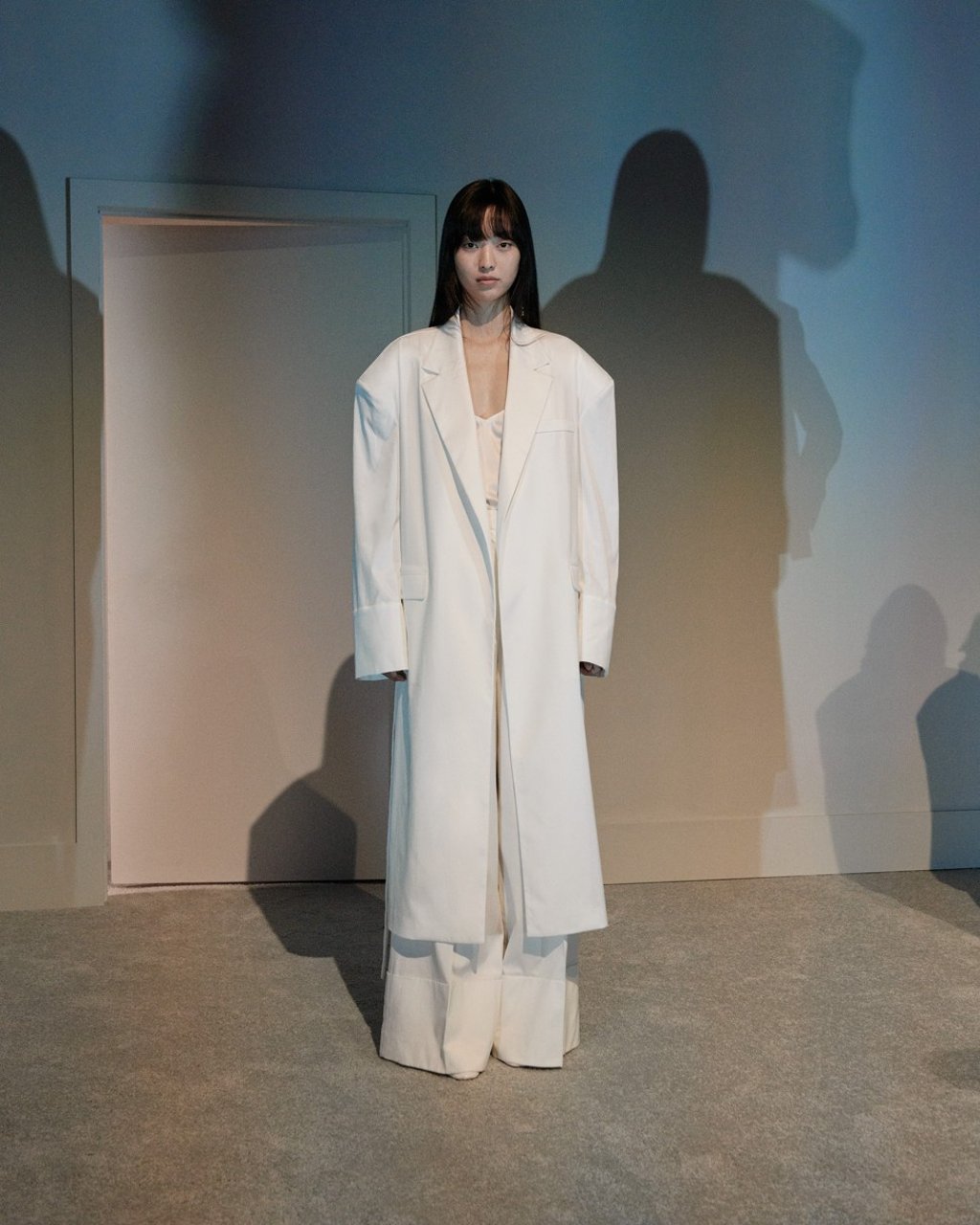
What are the biggest hurdles facing the Korean fashion industry? “[It] is expanding really fast, and the street-style culture in Seoul is huge – which has fuelled a lot of counterfeiting. It’s a trend-based industry, which means that designers are working fast to churn out tons of pieces as cheaply as possible. K-pop is a big influence on what people wear, as are the big fashion houses like Balenciaga and Gucci. A lot of Korean labels copy big brands really obviously.”