How a tour of Cambodia’s capital Phnom Penh reveals a heritage hotbed beneath the new Chinese money
- Phnom Penh might seem like one huge building site fuelled by Chinese money but heritage tours uncover its abundant historical and traditional architecture
- Highlights include the art deco governor’s house, the stucco-clad Chinese House, and a Taoist temple, the only one of its kind to survive the Khmer Rouge

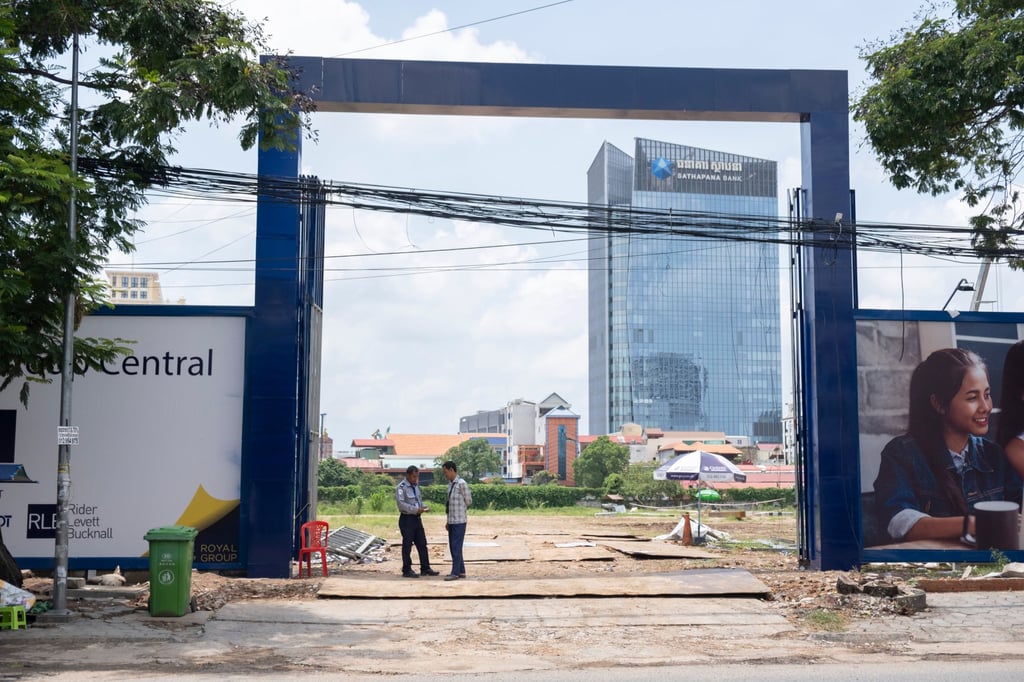
The screech of electric saws and pounding of jackhammers are never far away in Phnom Penh.
As you explore the Cambodian capital’s tree-lined streets, you might, for a moment, imagine yourself in southern China, given the number of building sites emblazoned with Chinese characters.
At every turn, it seems, something is being torn down or is in the process of going up.
As the capital of the French Protectorate of Cambodia, it was known as the Pearl of the Orient – a nickname it shared with several other cities in the East – on account of its stately boulevards and Parisian-inspired architecture.
Visiting in the 1960s, Singapore’s then prime minister, Lee Kuan Yew, is said to have remarked to Cambodian leader Norodom Sihanouk, “I hope, one day, that my city will look like this.”