[The content of this article has been produced by our advertising partner.]
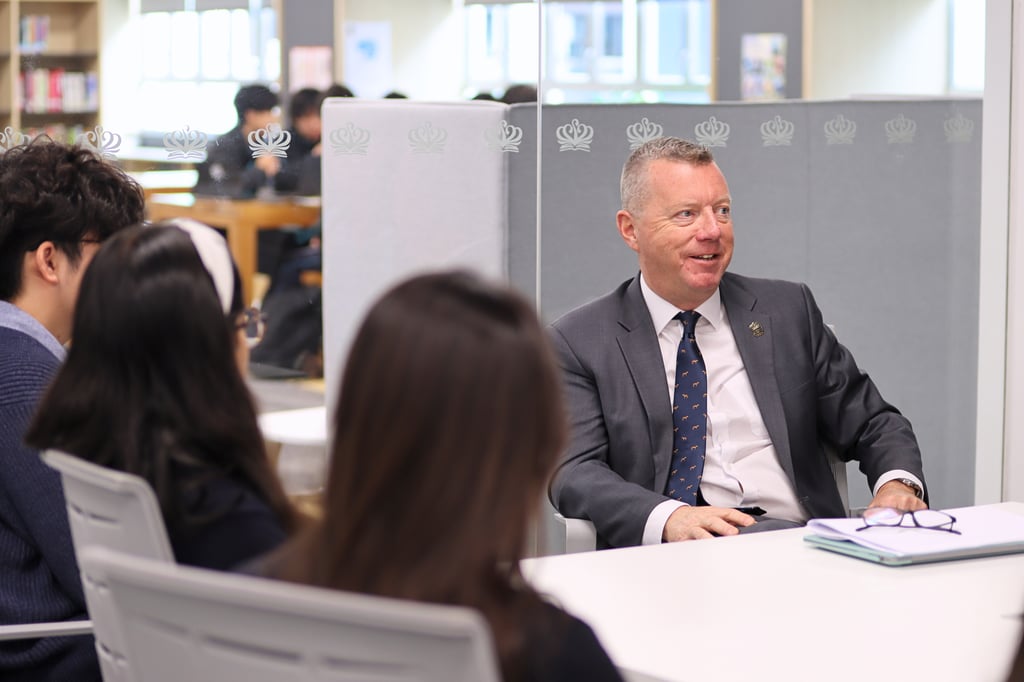
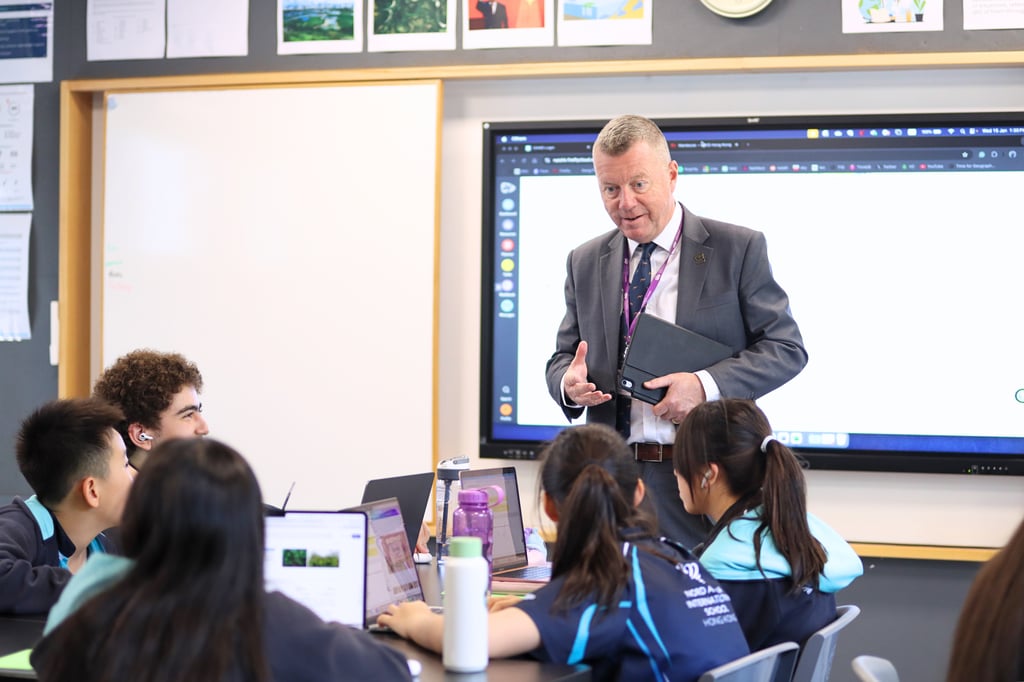
Tim Richardson, former Principal of the British School of Guangzhou, joins NAIS Hong Kong from August 2025. In preparing to assume duties as the new principal of Nord Anglia International School Hong Kong (NAIS Hong Kong) next month, Tim Richardson can draw on a wealth of relevant experience.
For the past three years, Richardson has held an equivalent position at the British School of Guangzhou (BSG), which is also part of the Nord Anglia Education group, meaning he is familiar with the organisation’s expected standards, policies and practices and has already met a number of future colleagues during conferences and regular exchange visits.
As a result, he views the new role as an opportunity that was too good to miss and has clear ideas about how to approach it.
“I have made a commitment to the school not to come in with a predetermined approach or make sweeping changes at the beginning,” Richardson says. “So, for the first six months, I expect to do more listening than talking and then, as part of a clearly defined process, will work with colleagues to revisit some of the underlying principles we have for school management and development.”
NAIS Hong Kong currently operates three campuses, with classes for the early years in Sai Kung, primary school in Lam Tin, and secondary school in Kwun Tong. The total student numbers are now over 1,500, and while there is some room for expansion, this must be closely managed in line with EDB guidelines.
Richardson notes that the Nord Anglia ethos is built around six core educational themes. These include having the world’s best teachers, providing outstanding learning experiences, instilling a sense of social purpose, and understanding what works best for each child. Our aim is to identify which aspects of this framework resonate most within the school community and to focus attention on these areas first.
“One priority will be to provide an environment in which teachers can perform their roles as effectively as possible,” Richardson says. “It will also be important to empower those in leadership positions, and to work with the Education Bureau (EDB) and the local authorities on key administrative matters.”
Besides that, great schools continually work to ensure curriculum content is relevant and meaningful, and is delivered by well-qualified and experienced teachers, something made easier by being part of a global group with a strong international reputation and access to central recruitment programmes.
“The organisation itself attracts top candidates for teaching posts,” Richardson says. “We can benefit from that when necessary, so our promise to parents about consistently achieving high standards remains intact.”
In addition, there is a huge professional development programme available to all teachers and assistants. It offers a wide selection of stand-alone courses online, which can even lead to a master’s qualification from King’s College, London.
“Some elements of professional development are mandatory, such as updated safeguarding training,” Richardson says. “Other areas, though, may be directed or recommended by a principal or simply be of special interest. For example, at BSG, I asked all teachers to take a course on EAL (English as an Additional Language) so they could support students learning academic subjects in a second or additional language.”
In fact, it was precisely this situation—teaching English to non-native speakers-that first drew Richardson into the teaching profession. After leaving school, he spent time in Japan as a volunteer language assistant, something arranged through a family connection, and never looked back.
“It was a life-changing experience working with secondary-age Japanese students and developing their English language skills,” he says. “I found it incredibly rewarding, and it set my compass for teacher training.”
So, after returning to Britain, he studied at Exeter University, qualified as a primary school teacher, and, at the first opportunity, accepted an offer to work in Dubai. Once there, he began by teaching 9- to 10-year-olds in upper primary classes before steadily taking on additional responsibilities. In due course, he was appointed principal of one of the emirate’s leading schools, where the main focus was on preparing students for further education and careers worldwide.
Ultimately, though, after 28 years in Dubai, Richardson and his wife decided it was time to move on to The British School of Guangzhou, taking heed of the advice they had often given to others about seizing opportunities and broadening one’s horizons.
Now at NAIS Hong Kong, this will mean dealing with new challenges, including working with students and teachers as they utilise AI to support teaching and learning, and determining the best ways to prepare school leavers for a rapidly changing world.
In areas like this, it is essential to work closely with parents and continue to emphasise the importance of whole-child development by teaching leadership responsibility, environmental awareness, and social impact.
“It wasn’t an easy decision to leave Guangzhou, but I am incredibly excited to be joining the well-established leadership team at NAIS Hong Kong,” Richardson says. “It is our job to make sure students and parents are getting what they want from the school and that we can confidently meet their expectations.”