Caritas Wu Cheng-chung Secondary School builds students’ resilience with the “We School” approach
- Caritas Wu Cheng-chung Secondary School (CWCC) embraces the trailblazing “We School” approach to nurturing students’ future-ready skills and resilience.
- The government-aided co-ed school uses English as its teaching medium and is a microcosm mirroring Hong Kong’s diversity and rich inspirations.
[The content of this article has been produced by our advertising partner.]
Thanks to parents’ recognition and support for CWCC’s “We School” approach, the number of students enrolled via the “S1 Discretionary Places Allocation” nearly tripled in 2022-23 compared with the previous academic year.
“We are encouraged by parents’ trust and confidence in us,” says Au Hoi-kin, Principal of CWCC. “It shows that our ongoing efforts in optimising the overall planning have paid off.”
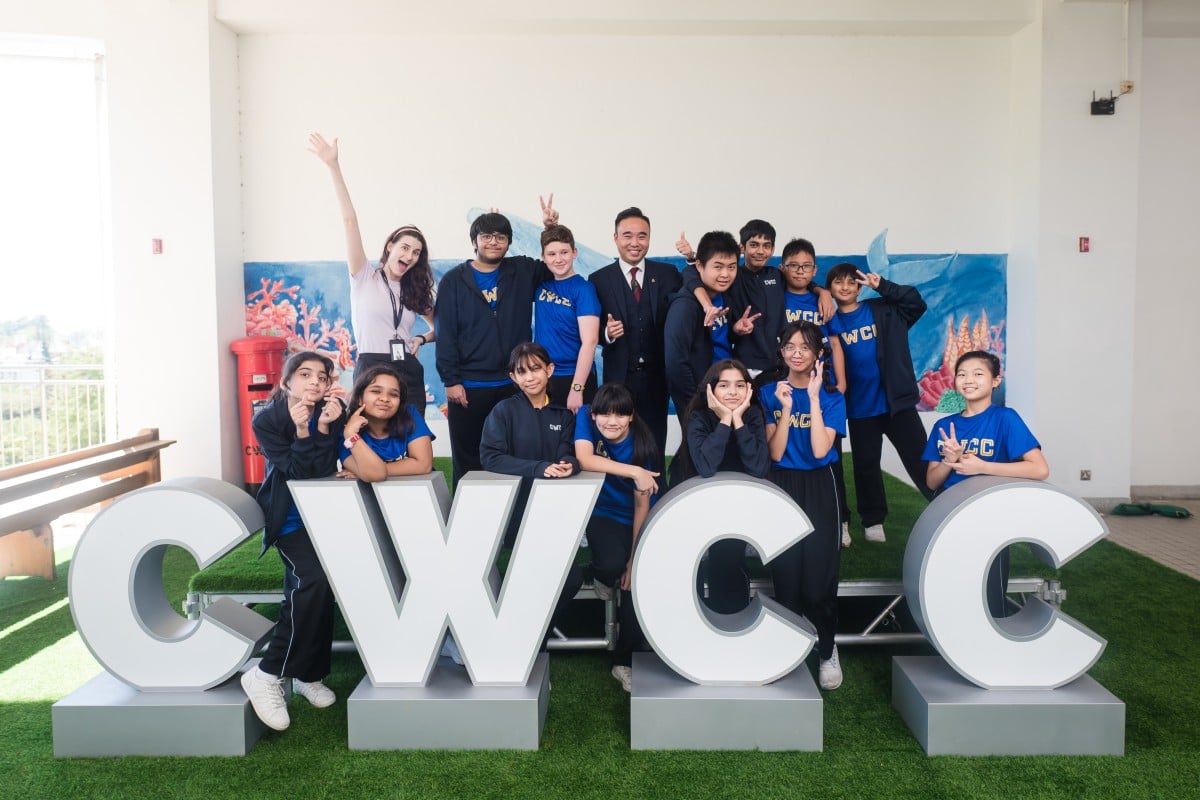
CWCC’s students - 70 percent of them are international ones hailing from 20 countries and regions and 30 percent native Hongkongers - thrive in the ‘glocalised’ experiential learning environment. The “We School” concept focuses on fulfilling the needs of students, regardless of their ethnic backgrounds, currently living in Hong Kong and equipping them with global citizens’ future-ready skills. It also emphasises cultivating mutual respect for diverse cultures and developing empathy to identify needs of the others for social innovations.
Under the “We School” spirit, the students and faculty are united as a team devoted to helping and serving others. It is exemplified with the newly completed lecture theatre for which dedicated school staff from all levels sacrificed their spare time to pitch in and help with the installation of floorboards, seats and other details. “The lecture theatre has since become the favourite cosy performance venue among our students,” Au adds.
This spirit provides the impetus driving the nurturing of the 21st-century global citizens at CWCC to achieve the ‘6Cs’, namely critical thinking; creativity; collaboration; communication, citizenship and character-building. CWCC’s environment mirrors the diversity in the outside world and its school-based curriculum fosters resilience and global citizen mindsets, he says. “Naturally students develop mutual respect for other cultures.”
The curriculum’s focuses fall into five main areas: STEAM; entrepreneurship; art and culture; media communication; and sports. They aim to empower students to unleash their full potential and acquire the ‘CWCC’ attributes, which are cheerful, warm, collaborative and confident, Au adds. “We hope our students are cheerful and confident because they enjoy the campus experience and capitalise on the opportunities for their self-actualisation. They exude warmth because of their kindness and willingness to help others. And they learn to be good team players.”
.JPG?itok=FwutWBL6)
STEAM
Infused with entrepreneurial spirit, CWCC’s STEAM curriculum motivates students to leverage design-thinking for social innovations with positive impact on the society. One of its students’ award-winning mobile apps shares information on stray cats. “The students developed empathy inspired by the stray cats in the neighbourhood. The rationale behind the informative app is to apply their IT knowledge and skills to help those in need,” Au says.
In collaboration with NGOs, CWCC students explore the community to identify social needs. For instance, they visited and interacted with residents at elderly care homes, some of them expressed frustration over not knowing what their children and grandchildren were doing. “The students later found a simple and effective solution,” Au says. “They returned to the care homes and taught the residents to stay updated on their families’ recent activities via the social media platforms.”
CWCC has built partnerships with universities and large corporations for its STEAM projects. The school works with the Centre for Information Technology in Education (CITE) of the University of Hong Kong as a “Project Web 3.0 Ambassador School”. HKU’s specialists help equip the students and teachers with the skills and knowledge to develop cutting-edge personalised experiences in the metaverse, NFT and blockchain.
CWCC’s “Swift Coding Lab” is powered by Apple and it is one of Microsoft Showcase Schools. It also participates in the AI project spearheaded by the Chinese University of Hong Kong.
Art, culture and sports
The main objective for art, cultural and sports activities is to promote mutual understanding and respect for diverse cultures. The school was approached recently by ViuTV to collaborate on a show featuring Dominican singer Chris Polanco, who had a multi-language jam session with the students. The show also featured Nepali folk dance and teaching of Chinese characters, Au says. “The event stimulated students to think about genuine integration in our society.”
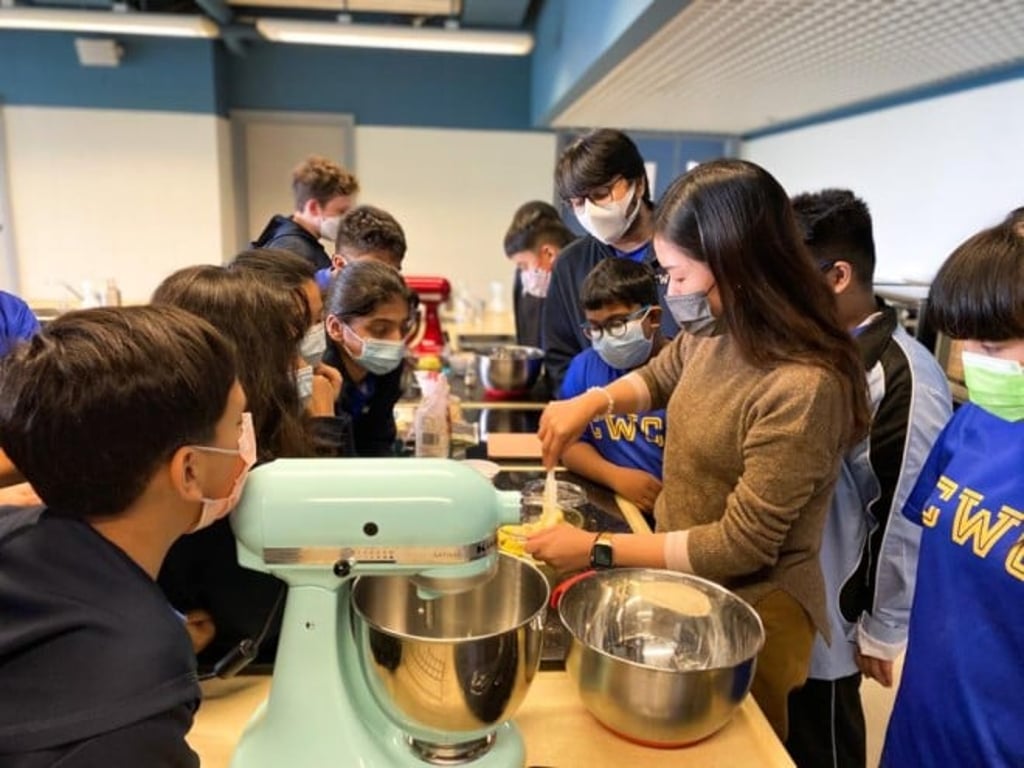
The newly completed cooking studio combines the teaching of life skills - vital to building resilience and independence - with the understanding of different cultures and the “We School” spirit of sharing. Students learn to prepare the basic dishes eaten at home and share them with other students. The students are prompted to learn about other cultures through exposure to varied cuisines.
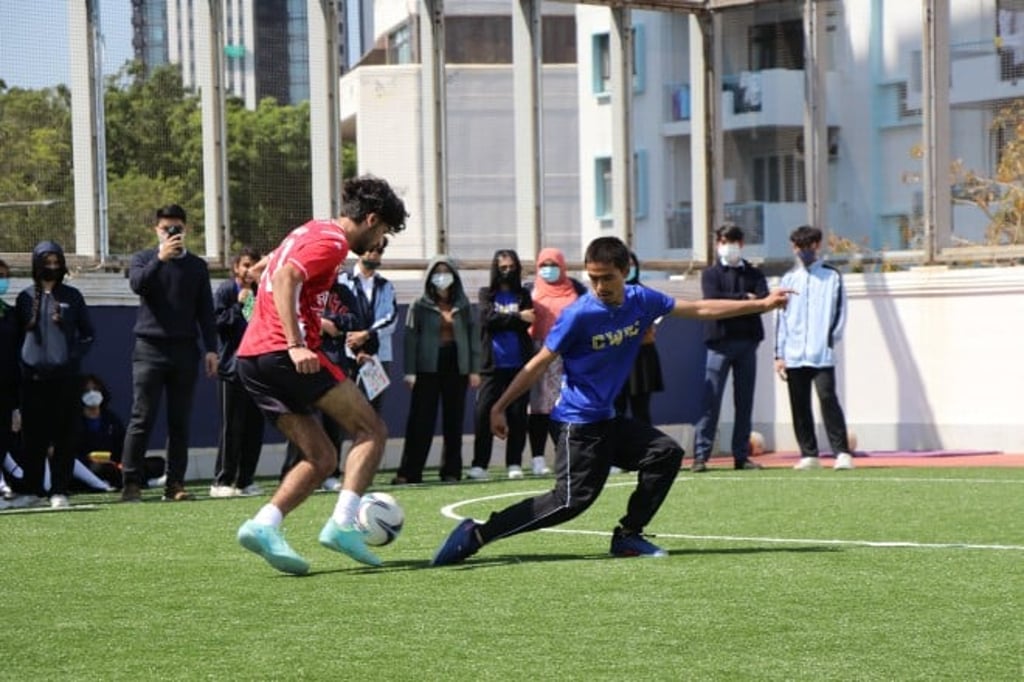
CWCC’s diverse sports and recreational facilities also include a newly built rooftop soccer pitch with French-made artificial turf and an esports room, where students learn about car racing, digital entertainment and esports management.
.jpeg?itok=r1_Am8zb)
iFuture Curriculum
In the iFuture Curriculum is an entrepreneurship programme delivered together with NGO Ednovators and the Education University of Hong Kong (EdUHK). Focusing on students’ life goal planning and future careers, the programme inspires students to think about the creation of new job categories in the future and cultivate their entrepreneurship, says Lo Yuk-kwong, Assistant Principal at CWCC.
Ednovators explores the education systems in different countries, gives teachers inspiring ideas and organises teachers’ exchanges. EdUHK conducts qualitative and quantitative research to identify problems and develop solutions with all stakeholders. “CWCC students, in groups mixing different forms, are involved in the research and focus group discussions,” Lo says. “Students also work with professors on app design, develop media projects and join multicultural fairs.”
CWCC is committed to its students’ whole-person growth. Its dual-mode academic curriculum prepares students for the exams of the Hong Kong Diploma for Secondary Education (HKDSE) or the International General Certificate of Secondary Education (IGCSE) and the General Certificate of Education (GCE) Advanced ‘A’ Level. It enables students to have more options for their tertiary education, either locally or overseas. The school awards scholarships to students who show impressive progress in their studies and other endeavours and sponsors students’ study trips abroad. Startup fund is also available for students’ social innovation projects.
The school provides shuttle bus service in Central and Wan Chai for students living on outlying islands.